Dubai, one of the fastest-growing economies in the world, is not only a tourism hub but also a safe haven and a financial center offering high returns for global investors. For those seeking passive income, Dubai’s real estate market provides unique opportunities with tax benefits and high rental yields.
In this article, we will explore in detail how you can create a sustainable passive income stream through real estate investment in Dubai, including strategic moves and key considerations.
1. Why Dubai Is Ideal for Passive Income
Passive income is a regular cash flow that does not require active work. In real estate, this typically comes from rental income. Dubai stands out from other major cities like New York, London, or Istanbul due to:
- High Rental Yields (ROI): Annual rental returns in Dubai range between 5%–9%, whereas many European and American cities offer only 2–3%. With the right location and projects, the capital recovery period can be significantly shortened.
- Tax-Free Income: There is no personal income tax or recurring property tax in Dubai. All rental income is retained by the investor, maximizing net passive income.
- Economic and Political Stability: The UAE has one of the most stable economies in the region. The local currency, the Dirham (AED), is pegged to the US Dollar, minimizing currency risk and allowing for dollar-based passive income.
2. Strategic Ways to Earn Passive Income in Dubai
There is no single path for investors in Dubai. You can choose different models depending on your needs and budget.
A. Long-Term Rentals
The traditional and lowest-risk method involves leasing your property under 1-year contracts.
- Advantage: Regular and predictable cash flow.
- Best Areas: Dubai Hills Estate, Jumeirah Village Circle (JVC), Damac Hills.
B. Short-Term / Holiday Rentals (Airbnb)
Dubai is a global tourism and business hub, making daily or weekly rentals highly popular. Especially after Expo 2020, tourist traffic has increased significantly.
- Advantage: 20%–40% higher earning potential than long-term rentals.
- Best Areas: Downtown Dubai, Dubai Marina, Palm Jumeirah.
C. Off-Plan Projects and Capital Appreciation
Another type of passive income comes from capital gains. You can buy property in under-construction projects and sell it at a higher price upon completion or rent it out for a premium. Payment plans are key in this model, allowing investors to own property with low installments until completion.

3. Area Analysis: Where Passive Income Thrives
The success of your investment depends heavily on location. Dubai areas can be classified as “Mature” or “Developing.”
A. Dubai Marina & JBR
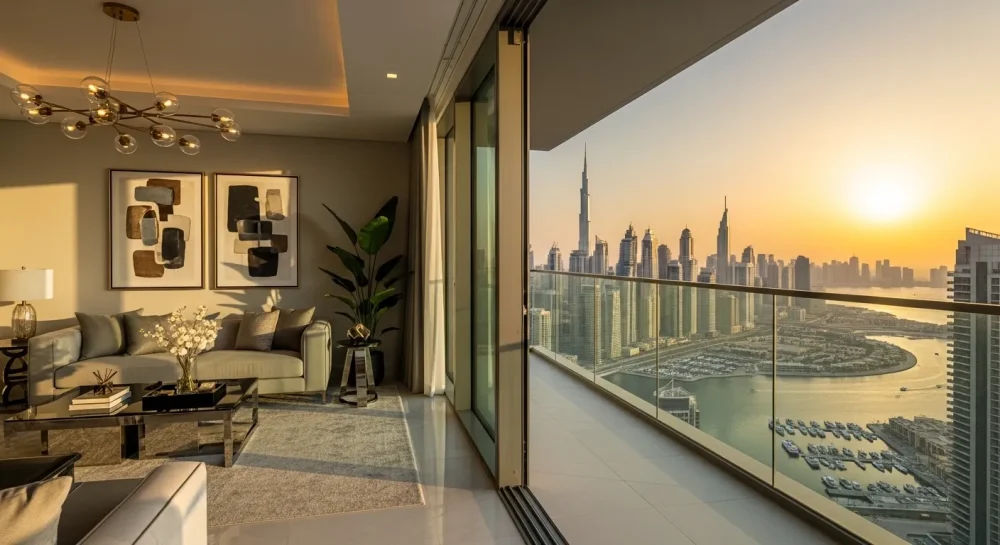
A top choice for tourists due to sea views and lively lifestyle. The vacancy rate is extremely low. Ideal for Airbnb rentals.
B. Downtown Dubai
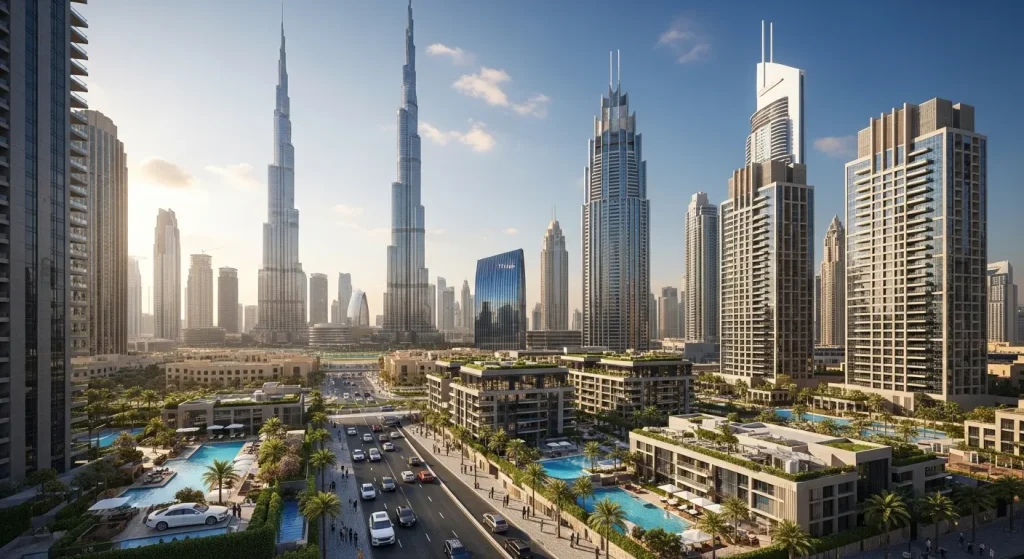
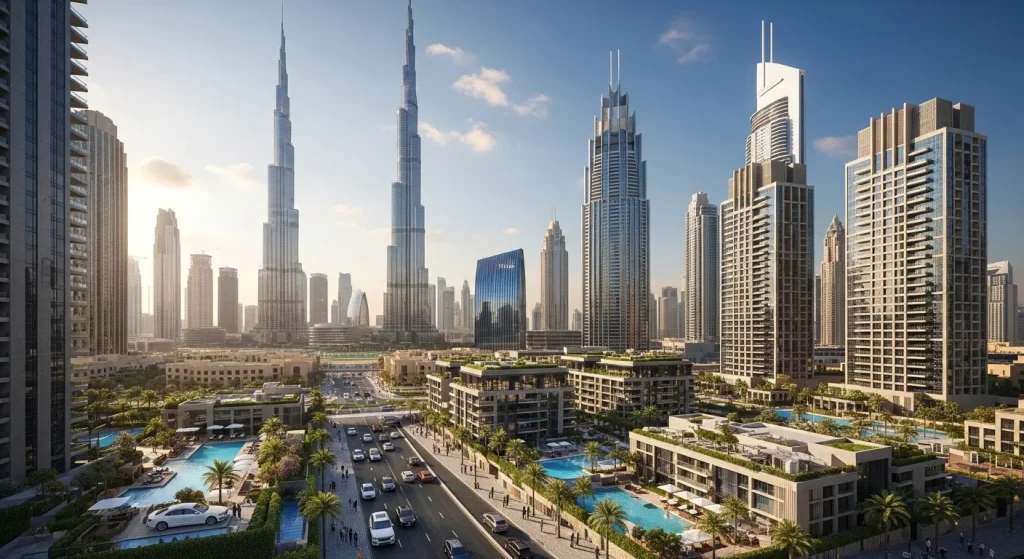
Home to the world’s tallest building, Burj Khalifa, and the massive Dubai Mall. Essential for prestige-focused investors. Properties here maintain value not only through rental income but also branded residence advantages.
C. Jumeirah Village Circle (JVC)
Currently one of Dubai’s most popular investment spots. Property prices remain reasonable, while rental demand is high. Preferred by young professionals and families. With ROI of 8–10% (amortization 10–12 years), it is an ideal starting point for high-return seekers.
D. Dubai Hills Estate
Known as the “Dubai of the Future,” this community is famous for green spaces and golf courses. Popular among families seeking luxury villas and spacious apartments. Perfect for finding high-quality long-term tenants.
4. Property Management in Dubai: The Secret to Remote Investment
If you do not live in Dubai, professional support is essential to keep your passive income truly “passive.” Property management companies handle:
- Tenant Selection: Background and employment checks.
- Legal Registration: All leases are officially registered under the Ejari system, protecting both landlords and tenants.
- Maintenance and Repairs: Any technical issues are resolved without your intervention.
- Legal Procedures: Rental increase limits (per RERA index) and possible eviction processes are managed according to law.
This professional approach ensures your investment generates hassle-free income.
5. Legal Framework and Investor Protection
Dubai’s real estate market is distinguished by transparency. The Dubai Land Department (DLD) and Real Estate Regulatory Agency (RERA) strictly monitor all transactions.
- Escrow Accounts: For off-plan projects, funds are deposited into a state-monitored escrow account instead of directly to the developer. Funds are released as construction progresses, eliminating the risk of incomplete projects.
- Ownership Rights: In Freehold areas, foreign investors hold 100% ownership of the property and land, documented through a Title Deed.

6. Step-by-Step Investment Guide
After selecting a project, the process flows as follows:
- Needs Analysis: Determine your investment goal—short-term cash flow or long-term capital growth?
- Unit Selection and Reservation: A copy of your passport and a reservation fee (typically 5–10%) is sufficient.
- Sales and Purchase Agreement (SPA): Sign the main contract provided by the developer.
- DLD Registration: Pay the 4% transfer fee to the Dubai Land Department and obtain your property ownership certificate.
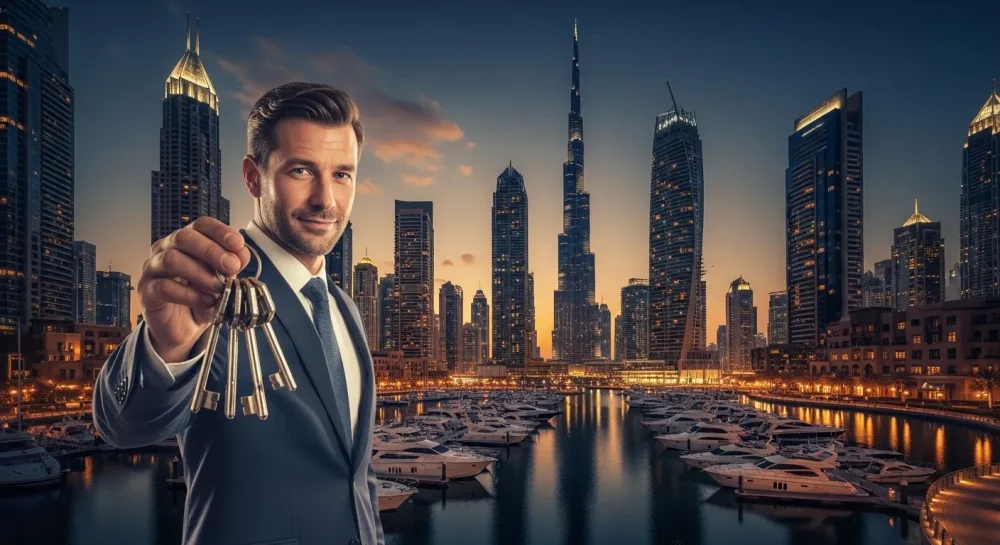
- Handover: Upon completion, a final inspection (snagging) is conducted, and keys are delivered.
7. Taxes and Costs to Consider
While Dubai is largely tax-free, there are some one-time costs:
- DLD Fee: 4% of the property value.
- Service Charges: Covers maintenance, pool, gym, and security for common areas; calculated per square meter and paid annually.
- Municipality Fee: Typically 5% of rent, usually billed to the tenant.
8. Dubai 2040 Urban Master Plan: A Vision for the Future
Dubai plans not only for today but for the future. The Dubai 2040 Urban Master Plan anticipates a population of 5.8 million. Key highlights include:
- Doubling of green spaces.
- Expansion of public beaches by 400%.
- Strengthening of economic and tech zones.
This plan guarantees that real estate investments made today will appreciate significantly over the next 15–20 years—not only through rental income but also through overall area development.
9. Frequently Asked Questions (FAQ)
Q: Is hiring a lawyer mandatory when buying property in Dubai?
A: Not mandatory, but working with a corporate consultancy ensures error-free processes.
Q: Can I buy property with a mortgage?
A: Yes. Banks offer up to 50% mortgage for non-resident foreigners. However, cash purchases or developer payment plans remain more popular.
Q: What if my property remains vacant?
A: In prime locations (e.g., JVC or Marina) and reasonably priced properties, vacancy periods are typically 2–4 weeks in a city like Dubai.
Investing in Dubai real estate is one of the safest gateways to passive income in modern finance. With dollar-based protection against inflation, high rental multipliers, and government-backed security, this market is invaluable for investors looking to grow their savings.
Tips to Maximize Your Passive Income:
- Explore projects ready for immediate rental post-handover.
- Consider small studio apartments, which offer higher ROI.
- Work with a reliable advisor who tracks market trends.
Secure your future and take advantage of Dubai’s real estate investment opportunities with our expert team—start building your dream investment portfolio today!